
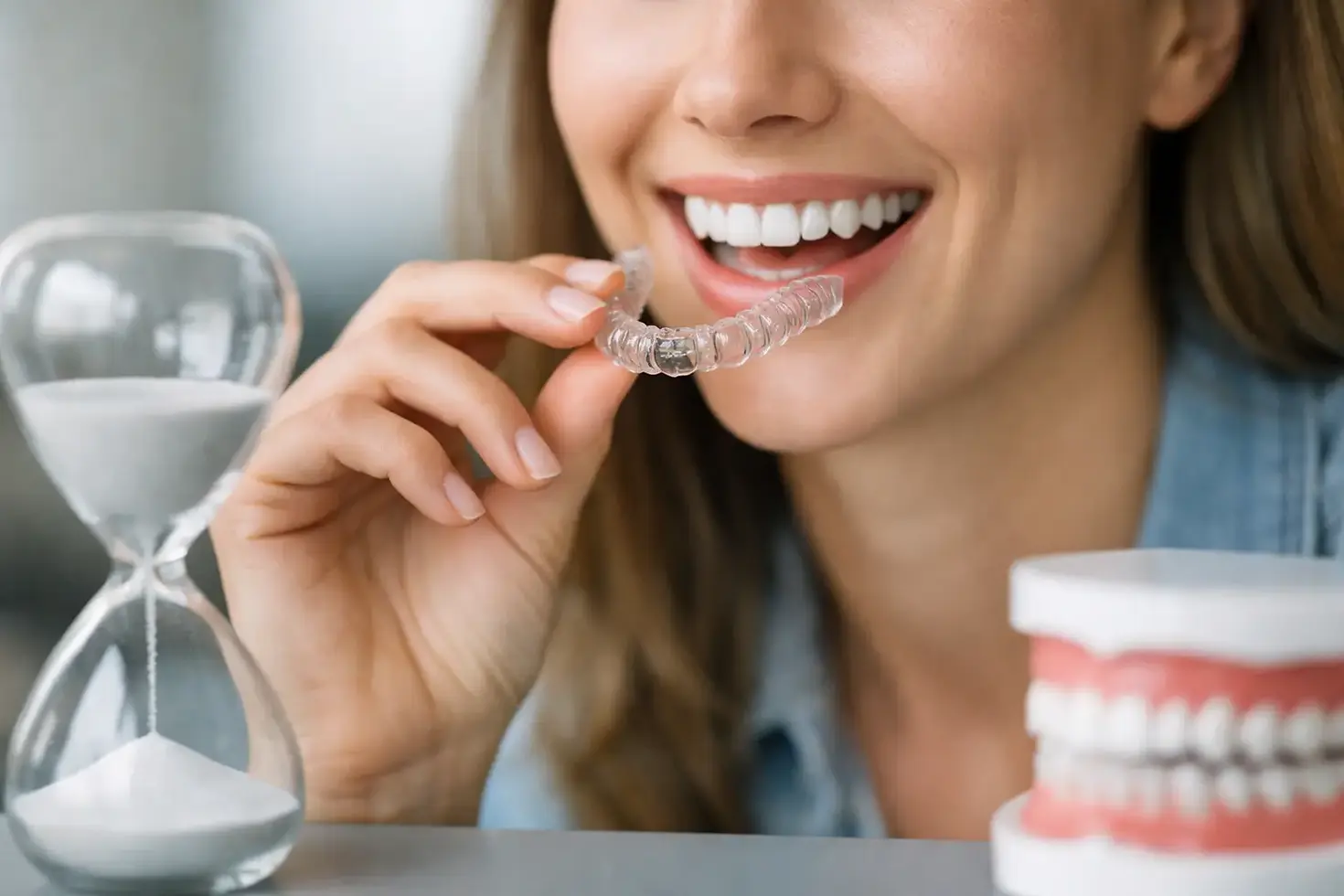
How Long Does Invisalign Take to Work?

If you are considering clear aligners, one of the first questions you probably have is how long does Invisalign take. The honest answer is that treatment time varies, but most people wear Invisalign for about 6 to 18 months. Some mild cases move faster, while more complex bite or spacing issues can take closer to 24 months.
That range can feel wide, especially if you are comparing options and hoping for a quick cosmetic fix. The good news is that your timeline is not a mystery. It depends on a few very specific factors, and once your teeth are evaluated, your dentist can give you a much clearer estimate based on your smile, your bite, and your goals.
How long does Invisalign take for most patients?
For many adults and teens, Invisalign treatment falls somewhere in the middle of the range - often around 12 months. If you only need to close a small gap or correct slight crowding, treatment may be shorter. If your teeth need more movement or your bite needs to be adjusted, it usually takes longer.
This is one reason Invisalign consultations matter. Two people may both want straighter teeth, but one might need only minor cosmetic refinement while the other needs a more involved correction. From the outside, those cases can look similar. Clinically, they are not.
A simple case might be finished in 6 to 9 months. A moderate case may take 12 to 18 months. A more complex case, especially one involving significant crowding, rotation, or bite alignment, can extend to 18 to 24 months.
What affects how long Invisalign takes?
The biggest factor is the complexity of your case. Teeth do not all move at the same pace, and not every movement is equally easy. Tilting a tooth slightly is usually faster than rotating one that is turned significantly or moving several teeth while also correcting your bite.
Crowding often takes time because space has to be created before the teeth can line up properly. Gaps can sometimes close more quickly, but not always. Bite issues such as overbite, underbite, or crossbite usually add more time because the goal is not just a straighter smile, but a healthier bite function too.
Your consistency also matters more than many people expect. Invisalign aligners are generally meant to be worn 20 to 22 hours a day. If you remove them too often or leave them out for long stretches, your teeth may not track as planned. That can slow treatment and may even require additional aligners.
Another factor is whether you need attachments, refinements, or other adjustments along the way. Attachments are the small tooth-colored bumps sometimes placed on teeth to help the aligners grip and guide movement. They are common and helpful, but they can signal that your case needs more precise control. Refinements are extra sets of aligners used after the initial series if a few teeth need more work. They are not unusual, but they can add time.
The typical Invisalign timeline, step by step
The first stage is your consultation and exam. Your dentist checks your teeth, gums, bite, and oral health to make sure Invisalign is a good fit. If you have cavities, gum inflammation, or other dental concerns, those may need to be treated before you begin.
Next comes digital planning. Modern dental technology can map your teeth and help plan each stage of movement. This gives you a projected treatment sequence and helps estimate how long your Invisalign process is likely to take.
Once your aligners are ready, you will start wearing the first set and switch to new trays on the schedule your dentist recommends, often every 1 to 2 weeks. You will also have periodic check-ins to make sure everything is moving properly. These visits are important because they catch small issues before they turn into delays.
At the end of your initial aligner series, your dentist will evaluate your results. Some patients finish at that point. Others need refinements to fine-tune the final tooth positions. After active treatment ends, retainers help maintain your new smile.
How long does Invisalign take compared with braces?
Invisalign and braces can have similar treatment times, depending on the case. For mild to moderate alignment issues, Invisalign may be comparable to braces and sometimes faster. For very complex movements, braces may still be the more efficient option.
This is where honest treatment planning matters. Invisalign is popular because it is discreet and removable, which fits well with work, school, and social life. But removable aligners also rely on patient compliance. Braces stay on full-time, so they do not depend on you remembering to wear them after every meal or coffee break.
That does not make one option universally better. It means the best choice depends on your needs and habits. If you are motivated and consistent, Invisalign can be an excellent option. If you know you may struggle to keep aligners in for the recommended time, braces may keep treatment more predictable.
What can make treatment take longer?
The most common delay is not wearing the trays enough. Taking aligners out for meals is expected. Forgetting to put them back in for hours is what causes problems. Small delays add up over weeks and months.
Missed appointments can also slow things down. Your dentist needs to monitor progress, make adjustments, and confirm that your teeth are tracking correctly. When check-ins are pushed back too far, treatment can lose momentum.
There are also biological factors. Everyone responds differently to tooth movement. Age, bone biology, gum health, and the starting position of the teeth all play a role. Adults can absolutely have great Invisalign results, but treatment may move at a different pace from one person to another.
In some cases, aligners stop fitting properly because the teeth are not tracking as expected. When that happens, your dentist may need to rescan your teeth and revise the plan. It is manageable, but it can extend your timeline.
How to stay on track with Invisalign
The simplest advice is also the most important - wear your aligners as directed. Aim for 20 to 22 hours every day. Only remove them for eating, drinking anything other than water, brushing, and flossing.
Keep your follow-up visits. If your schedule is busy, choosing a dental office with convenient appointment options can make a real difference over the course of several months. Staying on top of check-ins helps your treatment stay on course.
Take care of your teeth and gums during treatment. Healthy gums support healthy tooth movement. Brushing and flossing consistently, cleaning your aligners, and avoiding habits that damage trays all help reduce setbacks.
It also helps to keep expectations realistic. Invisalign is effective, but it is still orthodontic treatment. Teeth are moving through bone, and that takes time. Faster is not always better if it means compromising comfort, stability, or bite function.
Is faster Invisalign always better?
Not necessarily. Most patients want results as soon as possible, which is understandable. But the goal is not only to straighten teeth quickly. The goal is to move them safely, create a balanced bite, and end with a result that lasts.
Shorter treatment can be great when the case is truly mild. Still, if a provider promises an unusually fast timeline without fully evaluating your bite, roots, and gum health, it is worth asking more questions. A rushed plan can lead to unfinished corrections or relapse later.
Good Invisalign treatment balances efficiency with precision. That means moving at the right pace for your mouth, not just the fastest pace advertised.
When should you book a consultation?
If you have been putting off treatment because you assume it will take years, it may be worth getting a professional opinion. Many people are surprised to learn that their case is more straightforward than expected. Others find out that they need a bit more time, but they appreciate having a clear roadmap instead of guessing.
At Broadway Dental Clinic, patients looking into Invisalign can start with a complimentary consultation and get a personalized estimate based on their smile, not a generic timeline. That kind of clarity makes it easier to plan around work, family life, and your budget.
The right timeline is the one that fits your teeth, your goals, and your daily routine. If you are wondering how long Invisalign will take for you, the most helpful next step is not comparing yourself to someone else - it is getting an expert evaluation and a plan you can feel confident about.


Comments