
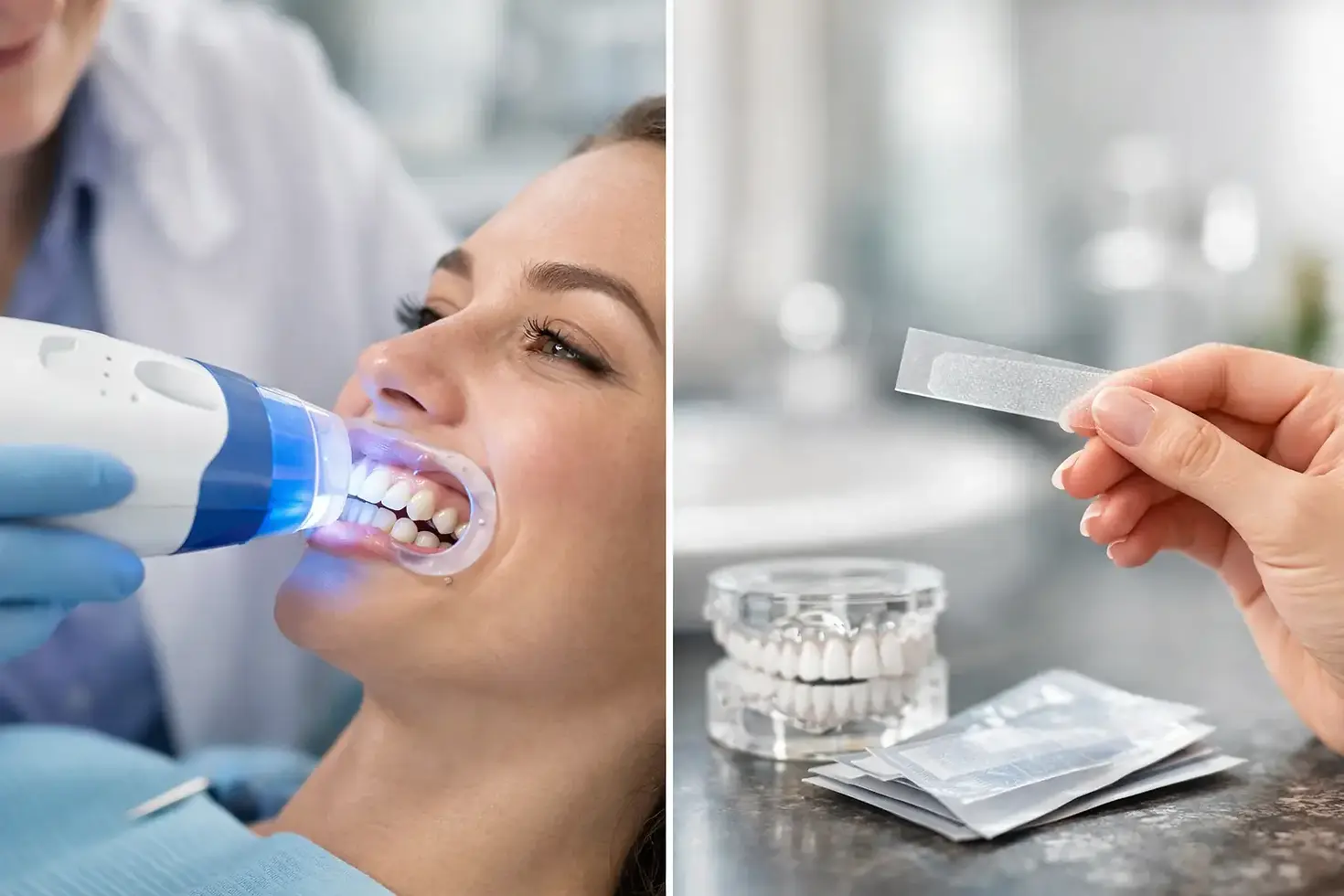
Professional Whitening Versus Whitening Strips

A whitening strip can feel like an easy answer before a wedding, job interview, or long-awaited family photo. But when comparing professional whitening versus whitening strips, the real question is not simply which option makes teeth look whiter. It is which approach fits your smile, timeline, comfort level, and oral health needs without creating avoidable sensitivity or uneven results.
At Broadway Dental Clinic, we help patients make cosmetic decisions with clear expectations and personalized care. For some people, strips are a reasonable short-term option. For others, in-office whitening provides the more noticeable, comfortable, and predictable change they want.
Professional Whitening Versus Whitening Strips: The Main Difference
Both treatments use peroxide-based whitening ingredients to break apart stains within tooth enamel. The difference is in the strength of the whitening formula, how precisely it is applied, and the supervision behind the treatment.
Whitening strips are over-the-counter products designed for broad use. They hold a lower-strength whitening gel against the front surfaces of the teeth for a set amount of time each day. They can gradually improve mild surface staining, particularly from coffee, tea, red wine, or tobacco.
Professional whitening is planned around your individual smile. A dentist evaluates your teeth and gums first, then uses professional-grade materials and techniques designed to deliver a more even result. The treatment may be completed in the office, supported by custom take-home trays, or approached with a combination of both depending on your goals.
That personalized planning matters. Teeth do not always darken evenly, and dental work such as crowns, veneers, fillings, and bonding will not whiten in the same way as natural enamel. A dental team can point out these details before treatment begins, rather than leaving you surprised after several weeks of strip use.
When Whitening Strips May Be a Good Fit
Whitening strips can be convenient for adults with generally healthy teeth, mild yellowing, and patience for gradual results. They are available without an appointment, cost less upfront, and can be used at home around a busy schedule.
They may be worth considering if you are looking for a small refresh rather than a dramatic change. For example, someone who has noticed light coffee staining and wants a modest boost before an event may be happy with what strips can do.
Still, convenience comes with limitations. Standard strips cannot be customized to the shape of your teeth, so they may not sit evenly along the gumline or reach every visible area. They can also slip, which may leave some teeth looking brighter than others. Because they are made for the general public, their whitening strength is typically lower than professional options, and results can be less dramatic or take longer to appear.
Why Patients Choose Professional Whitening
Professional whitening is often the preferred choice for people who want a more visible change in less time. It is especially helpful for patients preparing for a milestone occasion or those who have tried store-bought products without seeing the improvement they hoped for.
Before treatment, your dentist can check for cavities, gum irritation, worn enamel, cracked teeth, and other concerns that may affect comfort or outcomes. Whitening is cosmetic, but it should still begin with a healthy foundation. Applying whitening products over untreated decay, exposed roots, or inflamed gums can be uncomfortable and may not be appropriate.
Professional care also allows for better control. The whitening material is placed more carefully, helping limit contact with sensitive gum tissue. Your dentist can adjust the plan if you have a history of sensitivity, recommend a gentler approach, or suggest custom trays that make at-home treatment more consistent than one-size-fits-all strips.
For many patients, the biggest benefit is predictability. Rather than guessing whether a box will work for your particular type of staining, you receive guidance based on your starting shade, enamel condition, and desired result.
Faster does not always mean instant perfection
Professional whitening can create a noticeable improvement quickly, but every smile responds differently. Natural tooth color, the cause of discoloration, and past dental treatment all influence the final shade.
Yellow staining often responds well to whitening. Gray or brown discoloration, staining from certain medications, internal tooth darkening after trauma, and discoloration around older restorations may require a different cosmetic solution. A dentist can help you avoid spending time and money on whitening when bonding, veneers, or a crown may be more suitable for one particular tooth.
Cost, Comfort, and Long-Term Value
Whitening strips usually cost less at the register, making them appealing for a first attempt at brightening teeth. However, it is useful to look beyond the initial price. If strips produce uneven whitening, cause sensitivity, or need to be repeated several times with limited change, they may not feel like the best value.
Professional whitening costs more because it includes clinical evaluation, stronger materials, customized application, and professional oversight. For patients who want reliable results and a plan that accounts for their existing dental work, that added value can be significant.
Sensitivity is another important part of the decision. Both strips and professional whitening can cause temporary sensitivity, particularly in people with thin enamel, gum recession, or a history of sensitive teeth. With strips, you may need to decide on your own whether to shorten wear time, pause treatment, or stop entirely. With professional care, your dental team can recommend ways to reduce sensitivity and adjust your treatment plan when needed.
The results from either option are not permanent. Coffee, tea, dark berries, tobacco, and normal aging can gradually deepen tooth color again. Good brushing and flossing habits, routine cleanings, and occasional touch-ups can help maintain a brighter smile longer.
Who Should Speak With a Dentist Before Whitening?
A consultation is a smart first step for nearly everyone, but it is particularly valuable if you have tooth pain, bleeding gums, frequent sensitivity, cavities, crowns or veneers in visible areas, or a tooth that has become noticeably darker than the others. Children and teens should also be evaluated before any whitening treatment.
Pregnant or nursing patients should ask their healthcare and dental providers for individualized guidance before using whitening products. The same applies if you have active orthodontic treatment, since whitening around brackets or attachments can create uneven color.
A professional exam does not commit you to an in-office procedure. It simply gives you the information to choose confidently. In some cases, the dentist may tell you that whitening strips are likely to meet your goals. In others, they may recommend cleaning away surface buildup first, treating an underlying concern, or choosing a professional treatment for a more comfortable result.
Choosing the Right Option for Your Smile
Choose whitening strips if your teeth and gums are healthy, your staining is mild, and you are comfortable with a gradual, less customized result. Follow the package directions carefully, avoid using strips more often than recommended, and stop if you experience significant pain or gum irritation.
Consider professional whitening if you want a more noticeable change, have an important date on the calendar, have experienced sensitivity with store-bought products, or want advice about crowns, fillings, veneers, or uneven discoloration. It can also be the better option when you value having a dental team monitor your comfort and help set realistic expectations.
A brighter smile should feel like a confidence boost, not a source of discomfort or guesswork. Whether you are considering your first whitening treatment or looking for results beyond what strips have delivered, a conversation with an experienced dentist can help you choose an approach that feels right for your teeth, your schedule, and the moments you want to smile for.


Comments